Do your bees hibernate?
Great question! I get asked this a lot especially this time of the year. It’s very cold, there is snow on the ground and ice. What are they doing in there? Are they still alive? I sure hope so.
The answer is this, they do not hibernate they stay active all winter long. The do something called cluster. They will form a tight ball around the queen to keep her warm and alive. The inner bees will eat honey and feed the queen. They will actually vibrate or shiver with their flight muscles to create heat to keep the hive a consistent temperature of 90-95 degrees even on these very cold winter days and nights. The outer layer of bees actually act as insulation for the inner core. The cluster will actually tighten on really cold days and loosen when it warms some, they will rotate positions constantly so no one stays cold for any length of time. They slowly move through the hive to consume their stored honey reserves, which they stockpiled during warmer months.
On warmer days of 45 and above if the sun is shinning and no harsh cold winds they will come out of the hive to do whats called cleansing flights. And yes that is exactly what it sounds like, they relive themselves. Honey bees are very clean and fastidious, they do their business outside and if it’s to cold they will hold it until they can get out.
If they go into winter well fed, lots of stores of honey and healthy they should have no problem surviving the winter months. The queen stops laying eggs in the late fall, so the girls don’t have to worry about feeding and keeping brood warm. But after the winter solstice she will slowly start laying a few eggs and as the daylight gets longer she will be laying more and more eggs. She will need to lay eggs for new bees to replace the winter bees that worked so hard to keep her and the colony warm and to have foragers ready to get to work to grow the hive. Weather permitting they will start foraging in late February and March.
Having a variety of plants, trees, shrubs for them to forage all through the growing season will allow them to collect pollen, nectar to feed baby bees and store lots of honey, for them and for US!!! Trees like maples, shrubs like mahonia, plants like winter aconite are some of the first plants to start suppling pollen and nectar.
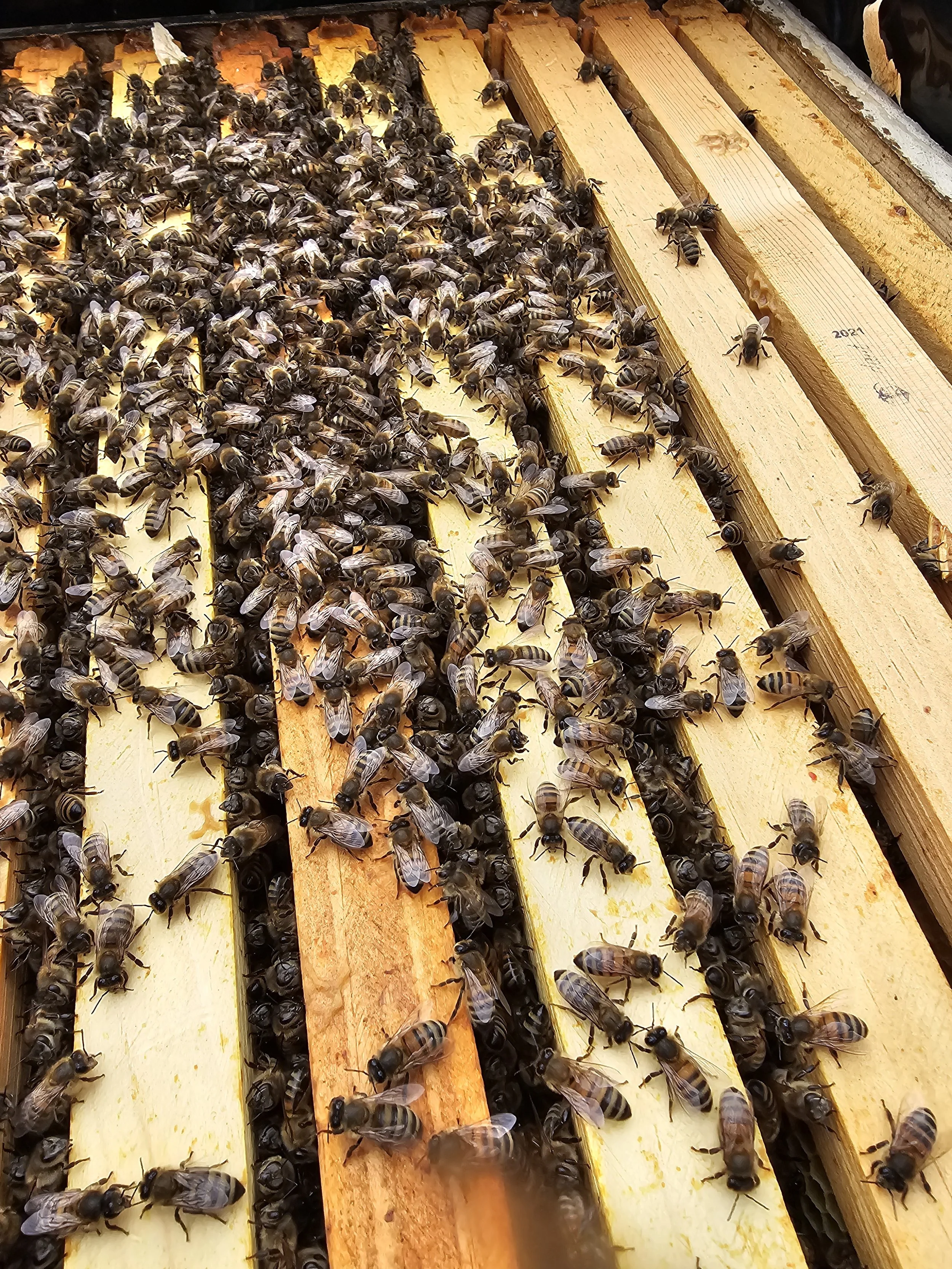
Inside the hive on Feb. 4th 2025
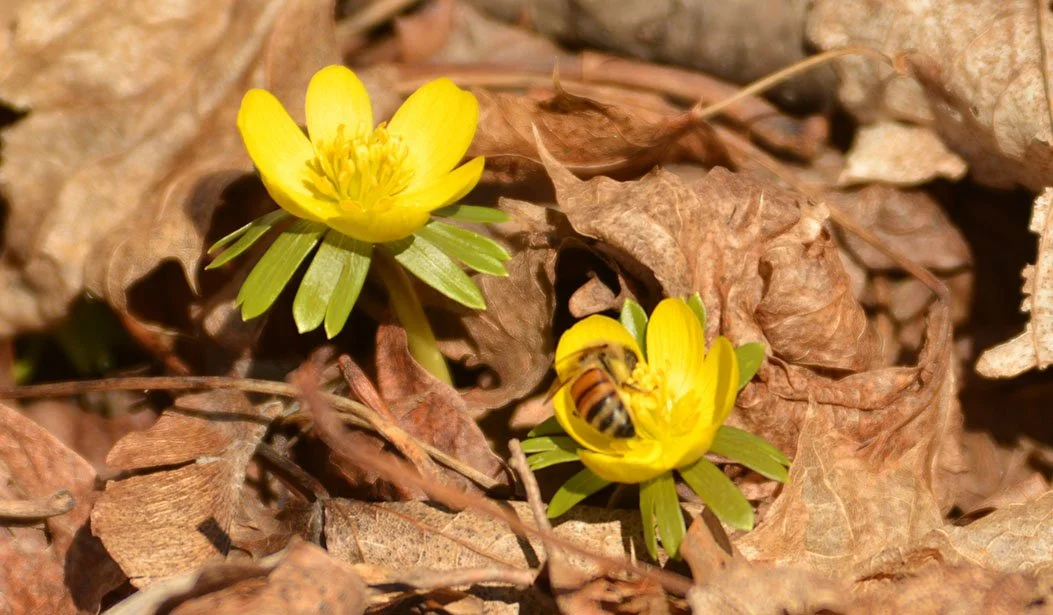
Winter aconite late January early February 2025